As an artist/curator, I have found myself working at/for institutions while developing creative projects there. I believe this interest started when while in college, Pablo Helguera introduced me to the practices of various artists who developed works at museums and other non-art related institutions. This led me to wonder about the «office as a studio space» and how a «9-5 job» could even be beneficial by providing structure to a creative yet dispersed mind.
Some of my most memorable experiences have been at the offices of Promoción del Arte, at the Ministry of Culture and Sports in Madrid where, as a Fundación Endesa Fellow, I developed the project Arttextum for 9 months straight during office hours. Years later, as the Director of Exhibitions and Residency Programs, I produced a series of exhibitions entitled Our Shared Home in a warehouse that served as studio spaces for artists in Santa Monica, California.
In a similar way, I proposed a project called The [Untold] Story of Craft for Craft Contemporary, in Los Angeles, California. As the museum’s Senior Curator, I wanted to ensure that my expertise as an artist was at the forefront for the production of this craft-based project. The team, most of whom are artists too, embraced the project amazingly, and helped me grow it in ways I’ve never envisioned it to become.
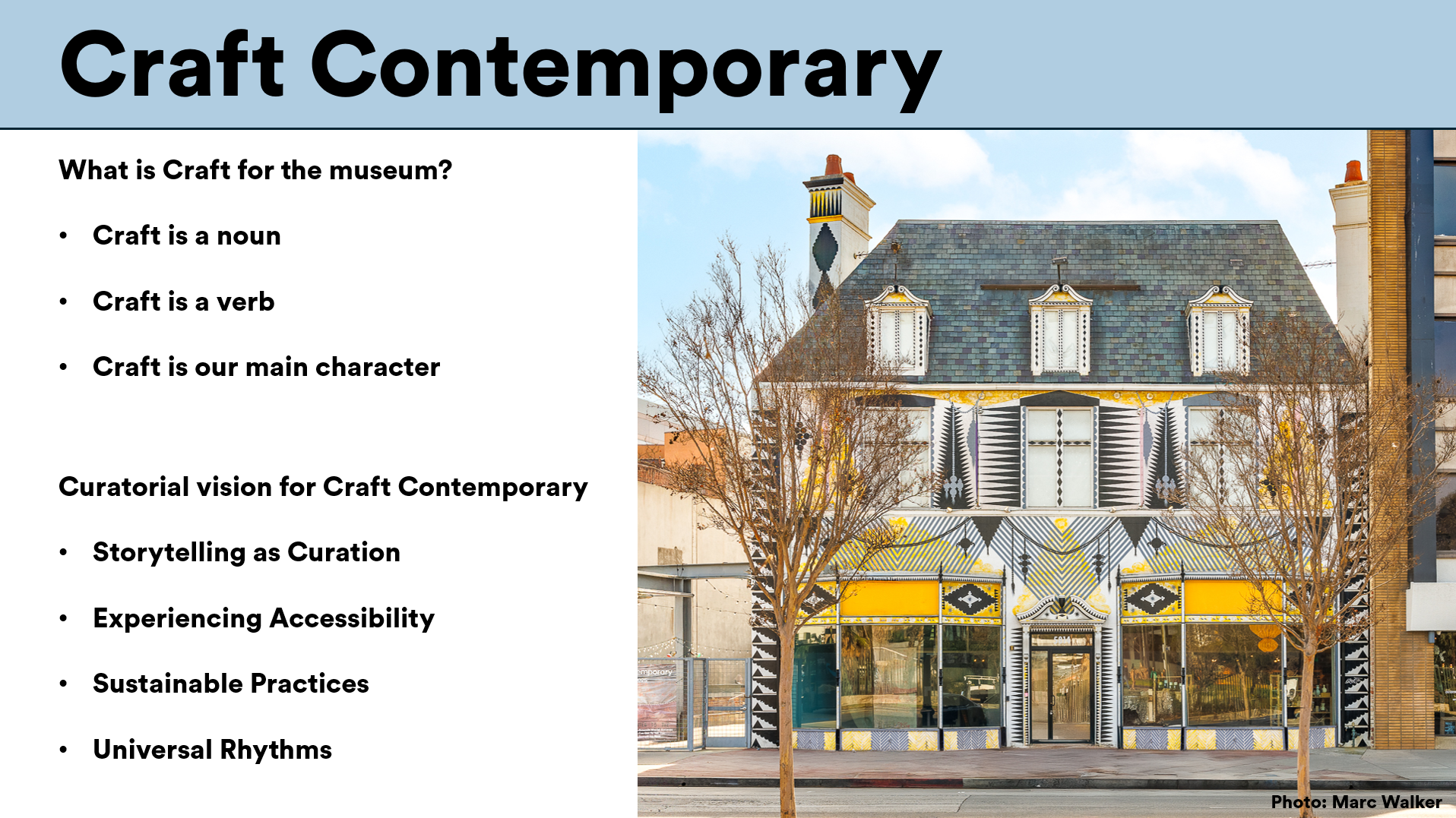
Cover image by Marc Walker. Image of the presentation of The [Untold] Story of Craft
The [Untold] Story of Craft is an innovative and transformative exhibition series at Craft Contemporary that reimagines Craft by connecting it to the broader story of humanity. Rooted in storytelling, sustainable practices, and the Tongva calendar’s cyclical rhythms, this series bridges past and present, linking ancestral wisdom with contemporary craft practices. It marks a significant shift in exhibition planning, integrating themes aligned with natural cycles and cultural narratives. The series is scheduled to feature two exhibitions annually, each dedicated to exploring a central theme tied to nature’s elements: air, water, earth and fire.
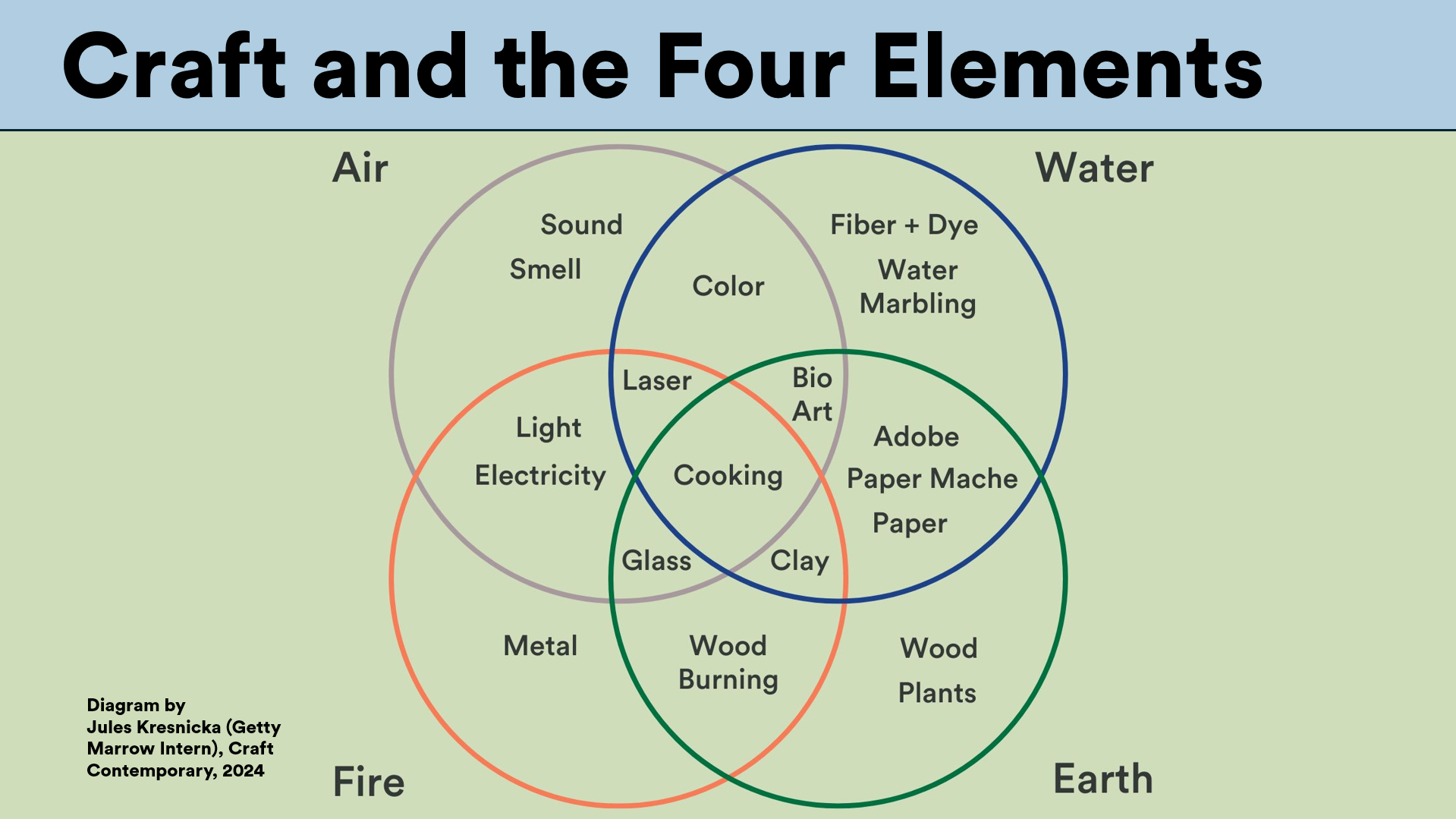
Image of the presentation of The [Untold] Story of Craft
In 2025, Craft Contemporary turned 60 years old. Since it’s conception, it has evolved into multiple venues that responded to its particular times: it started in the 60s as an omelet restaurant and gallery space called The Egg and The Eye, then in the 70s it became a nonprofit under the name Craft and Folk Art Museum, and in 2019 it finally became Craft Contemporary to better reflect its mission within the contemporary art world. Despite its long history of making all kinds of exhibits and programs (festival of masks, film related exhibitions, launching careers of artists), I believe that there are still some stories that haven’t been yet explored by this museum: these are the stories that The [Untold] Story of Craft focuses on.
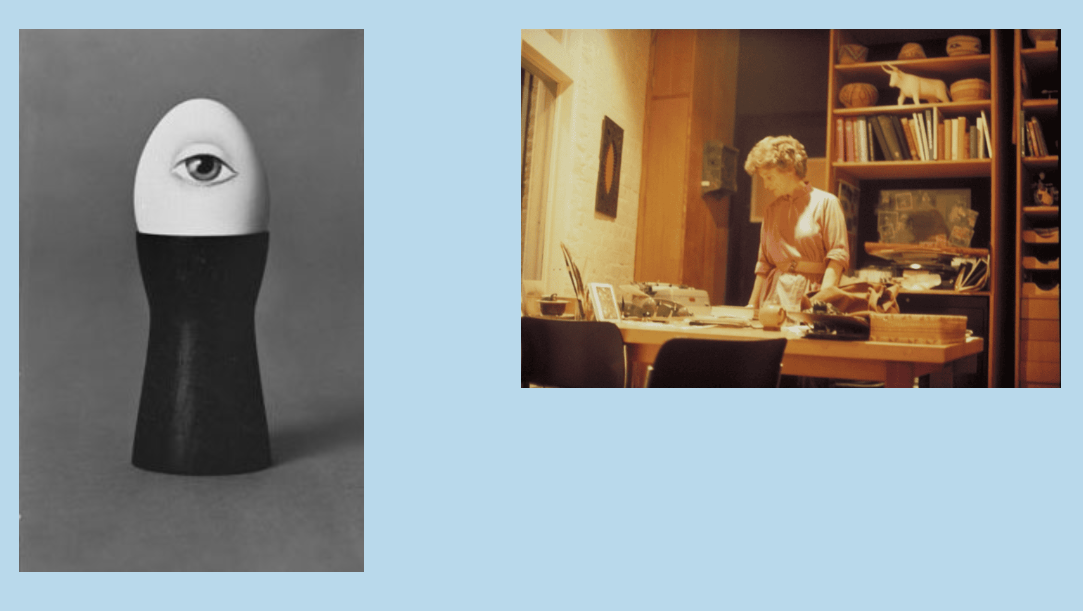
Image taken from Craft Contemporary’s website on The Egg and The Eye
As a starting point, I worked on a current definition of craft, so we could all have a solid basis from which to work on. We defined craft as a universal skilled activity involving manual work, where the emphasis is on the process, materials, and a high degree of expertise and care. This can include creating both functional and non-functional objects that reflect the Zeitgeist. It activates the head, the heart, and the hands, improving wellbeing, restoring the body and mind, and connecting us with our past, present, and future. Hence, Craft Contemporary will be conducting «practical research» through exhibitions and public programs on the importance of craft for an AI-tech based era, serving as a living example of how the art world can shift away from extractive practices and adopt responsible relationships with nature.
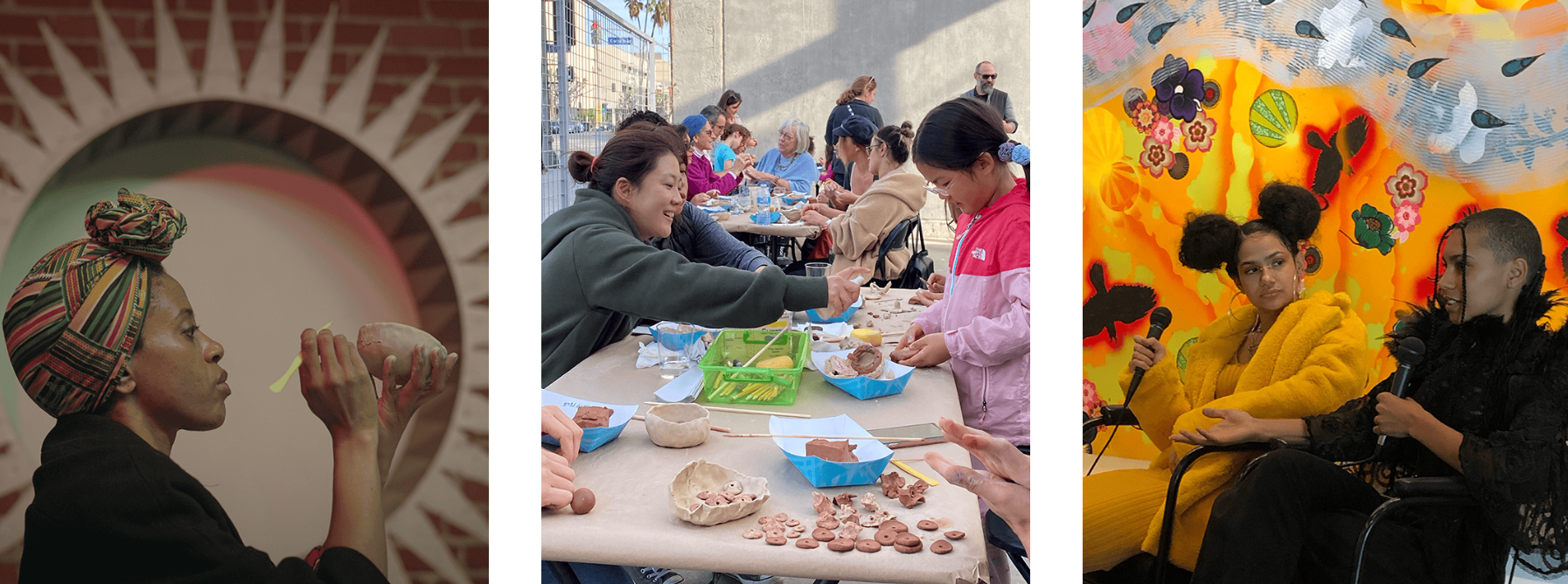
Image taken from Craft Contemporary’s website on Public Programs
For the project, craft is seen as a noun, a verb, and the main protagonist of the exhibitions and public programs. The museum bases the production of its exhibitions and public programs on The [Untold] Story of Craft‘s four pillars:
Pillar 1: Storytelling as curation
Artists and curators are exceptional storytellers of their times. Those who are brave enough to leave their comfort zone, in other words, allowing the context to permeate their creative processes, can become the voice of the Zeitgeist. Embracing storytelling to producing exhibitions and selecting the artists, makers, guest curators, and partners with whom Craft Contemporary is co-writing these stories, are key pillars for innovation in contemporary curation. Storytelling is also a means to pass knowledge from generation to generation amongst Indigenous peoples; adopting this mode of learning and engaging with wisdom is a homage to the ancient cultures that still exist to this day.
Images of the presentation of The [Untold] Story of Craft
Pillar 2: Experiencing accessibility
Contemporary art museums are known for their elitism when it comes to approachability to the exhibiting elements such as the curatorial text or the featured artworks. Even as an expert in the field, this feeling of exclusion is sometimes prevalent. Craft Contemporary, being a craft-based museum, has the unique opportunity to employ craft as a means for accessibility using not just the sight but all five (or more) physical senses. In this sense, accessibility involves not just following the ADA Standards for Accessible Designs in the building and the museography, but also a holistic experience honoring the artists’ and visitors’ backgrounds. With this pillar of accessibility, the museum aims to not only produce exhibitions but memorable experiences through contemporary art and craft by activating all the senses of the body.
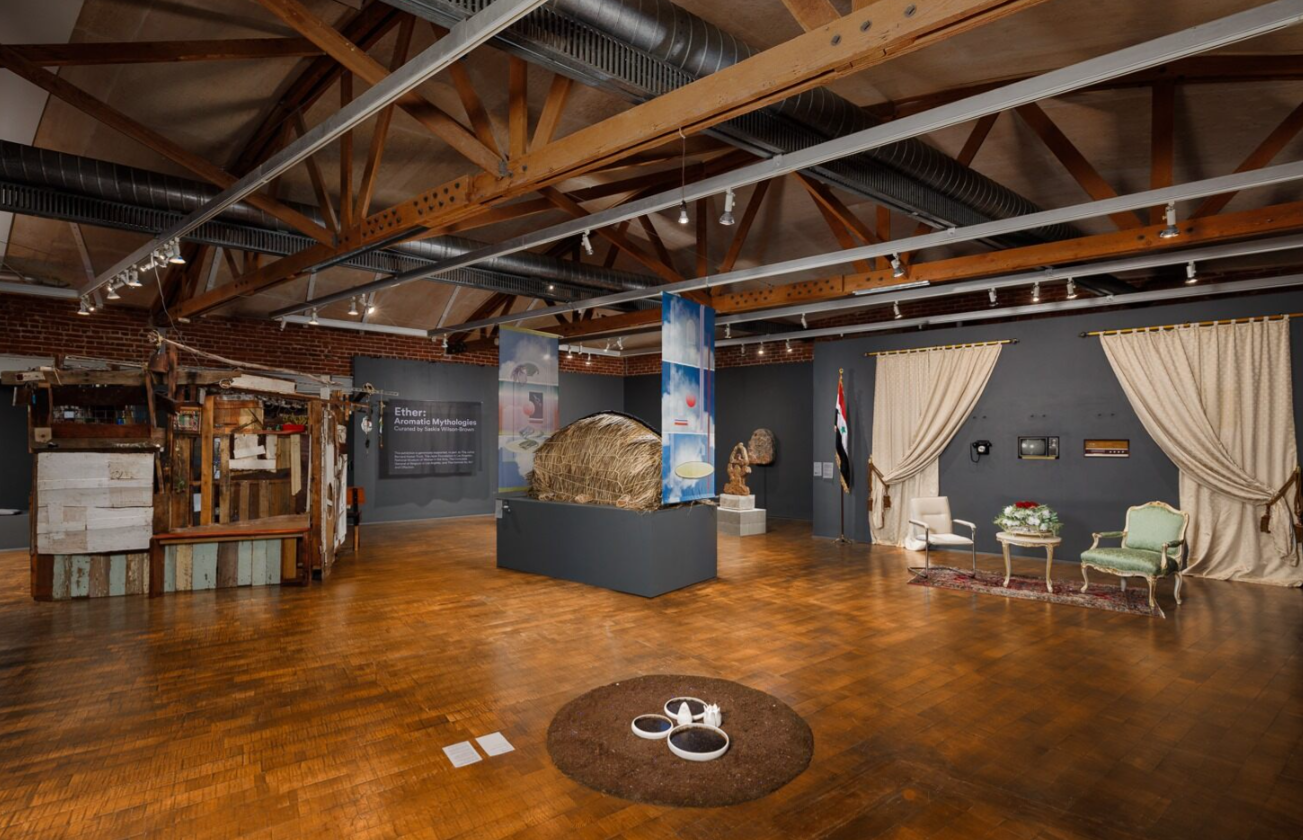
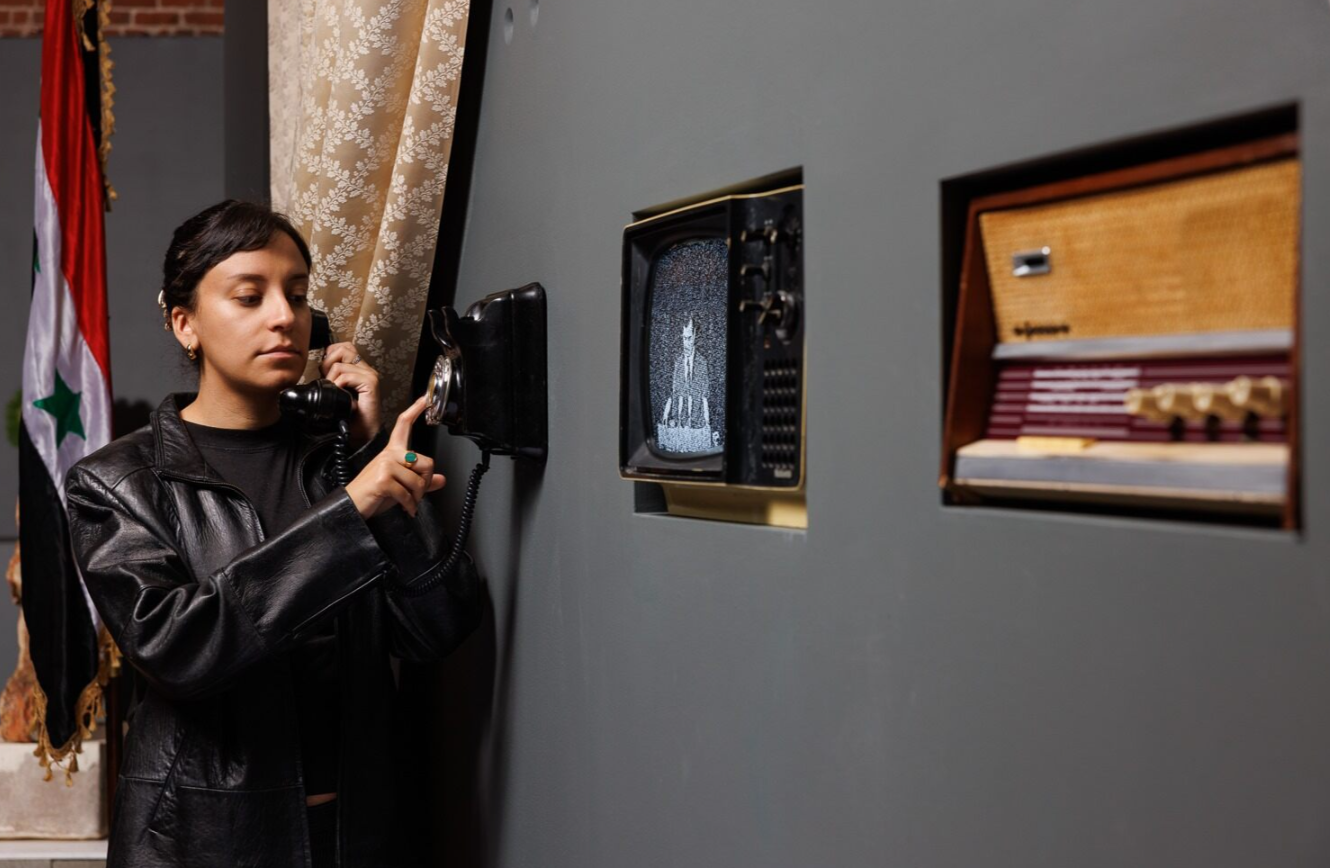
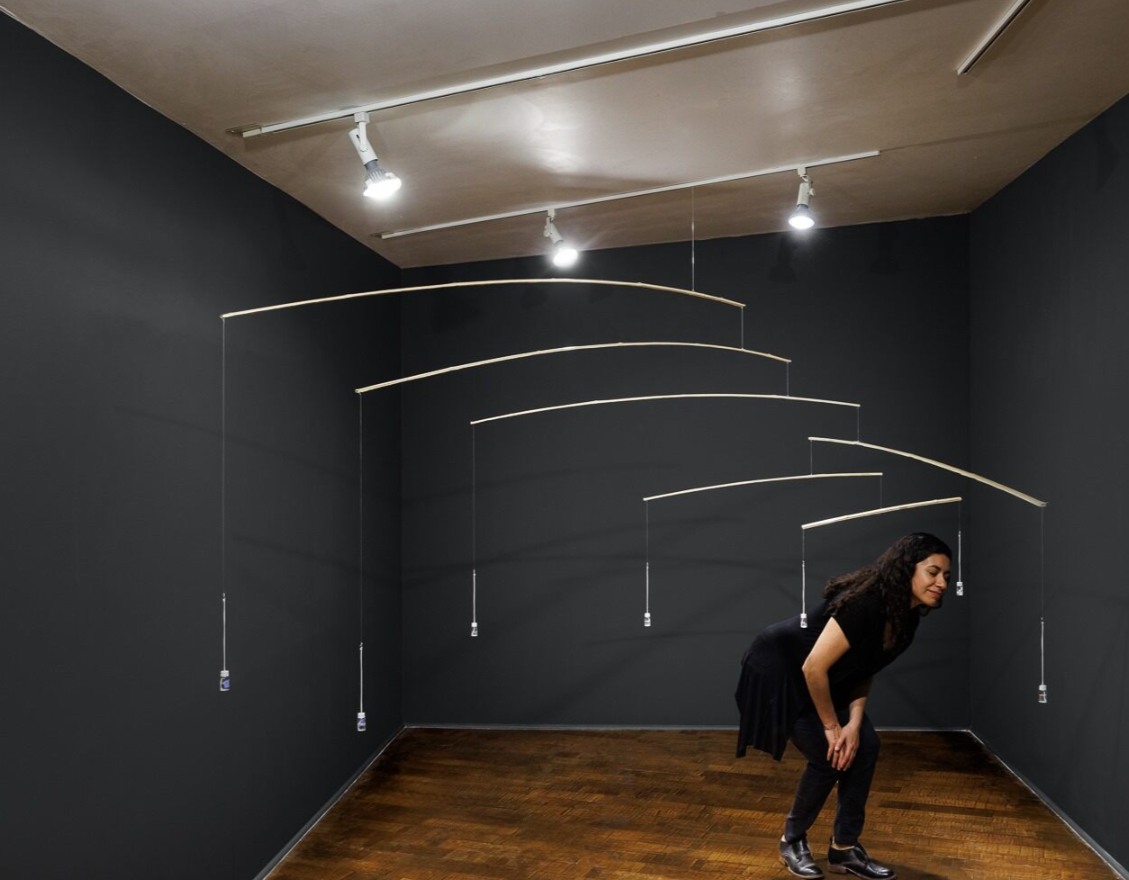
Images by Marc Walker, of Ether, Aromatic Mythologies, at Craft Contemporary, 2025.
Pillar 3: Sustainability
Under this project, Craft Contemporary is committed to producing zero-waste exhibitions by utilizing fair-trade, organic, and eco-friendly materials for the exhibition design that will later be recycled, uplifted, and repurposed with the help of the Education Department. The usage of non-bleached paper, organic fabrics and yarns, and even pencil on wall, are some of the methods that are now used to generate the wall texts for the shows and that will later be used as materials for the workshops with students – no more vinyl decals or petroleum-based materials for temporary texts. LED lights now illuminate the galleries – no more incandescent light bulbs. We reutilize metal studs and plywood for temporary walls – no more drywall or carcinogenic materials when building walls. We consciously use natural pigments in paints created in-house for accent walls – no more petroleum-based paints with hazardous fumes. We are reducing or even avoiding using air conditioning in galleries whenever possible. We are printing the didactics in-house of exhibitions consciously and incentivizing their collection for a compilation of stories that altogether will form a book. We prioritize working with artists and artisans whose practices are eco-friendly, impacting the workshops and public programming offered by the museum. These are some of the initiatives successfully implemented by Craft Contemporary’s staff under the umbrella of The [Untold] Story of Craft. Noticing how every exhibition produced less waste, I am confident that the museum will achieve its goals with no trouble. Sustainability is also inspired by the recurrent work with the four natural elements during the exhibitions (air, water, earth, fire), in this sense, it is no longer a concept but a practice and collaboration with the elements that make life. Sustainability within the art world is one of my passion-fields of action since there is still a lot of work to be done.
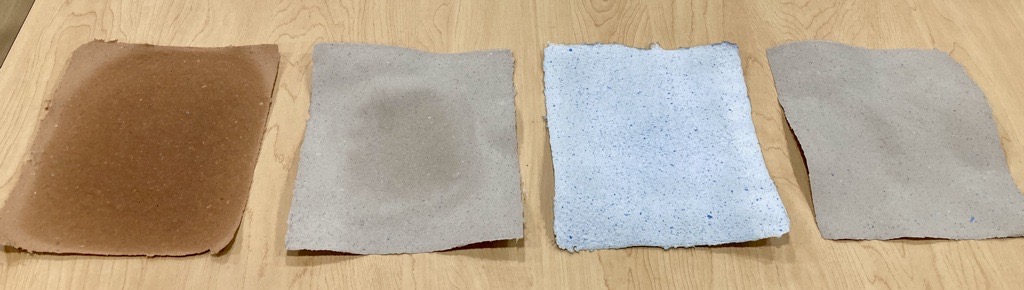
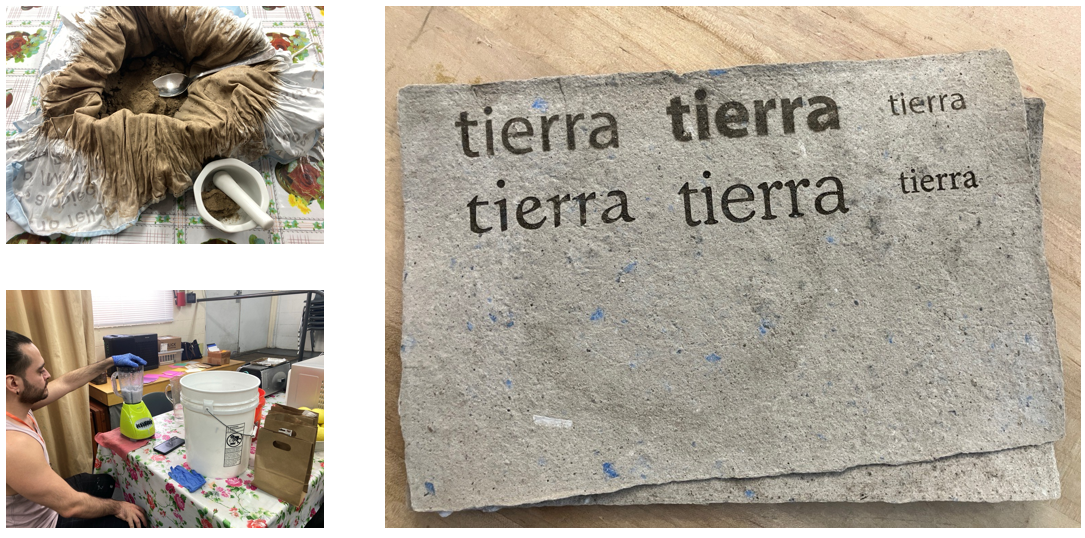
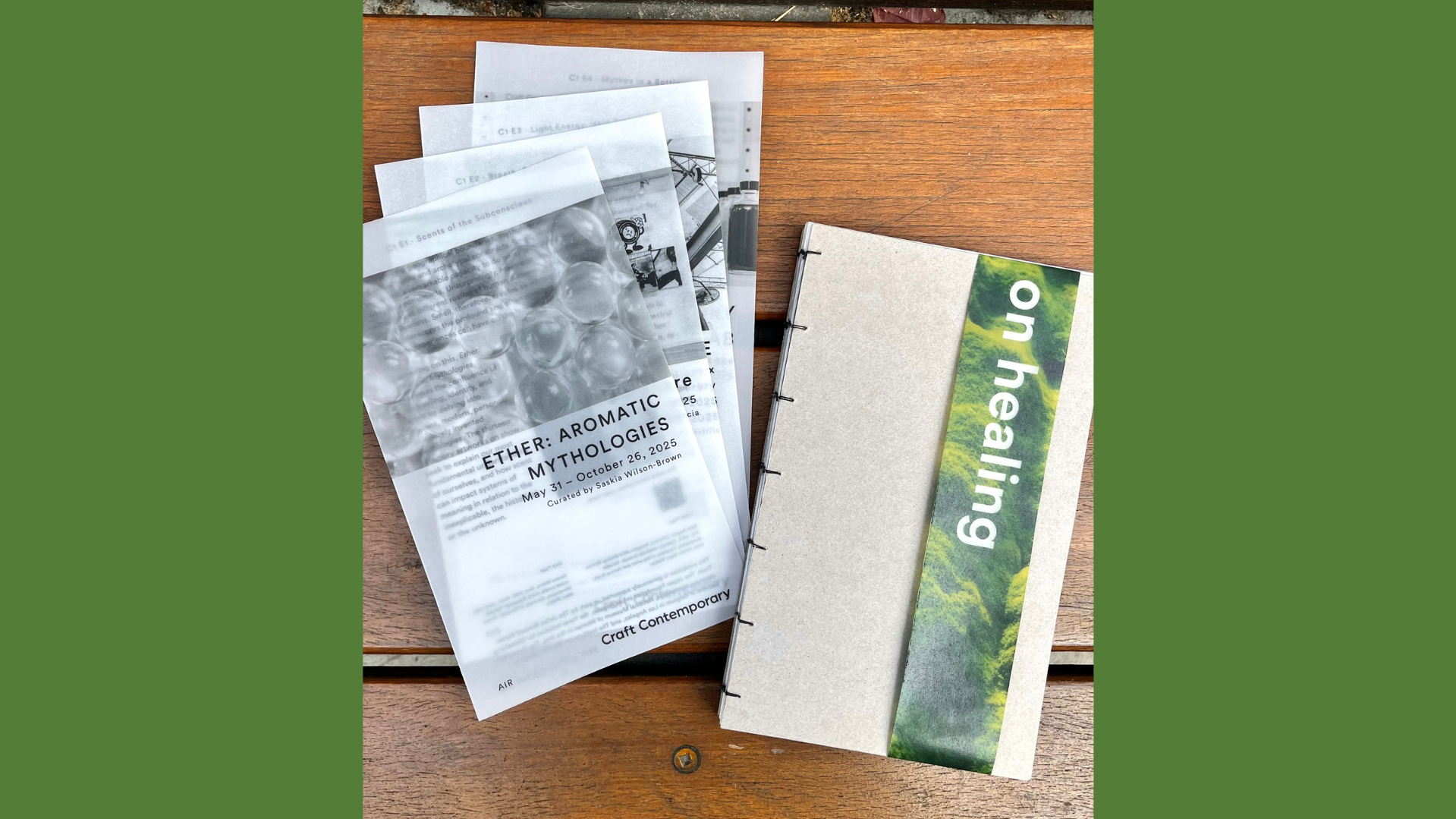
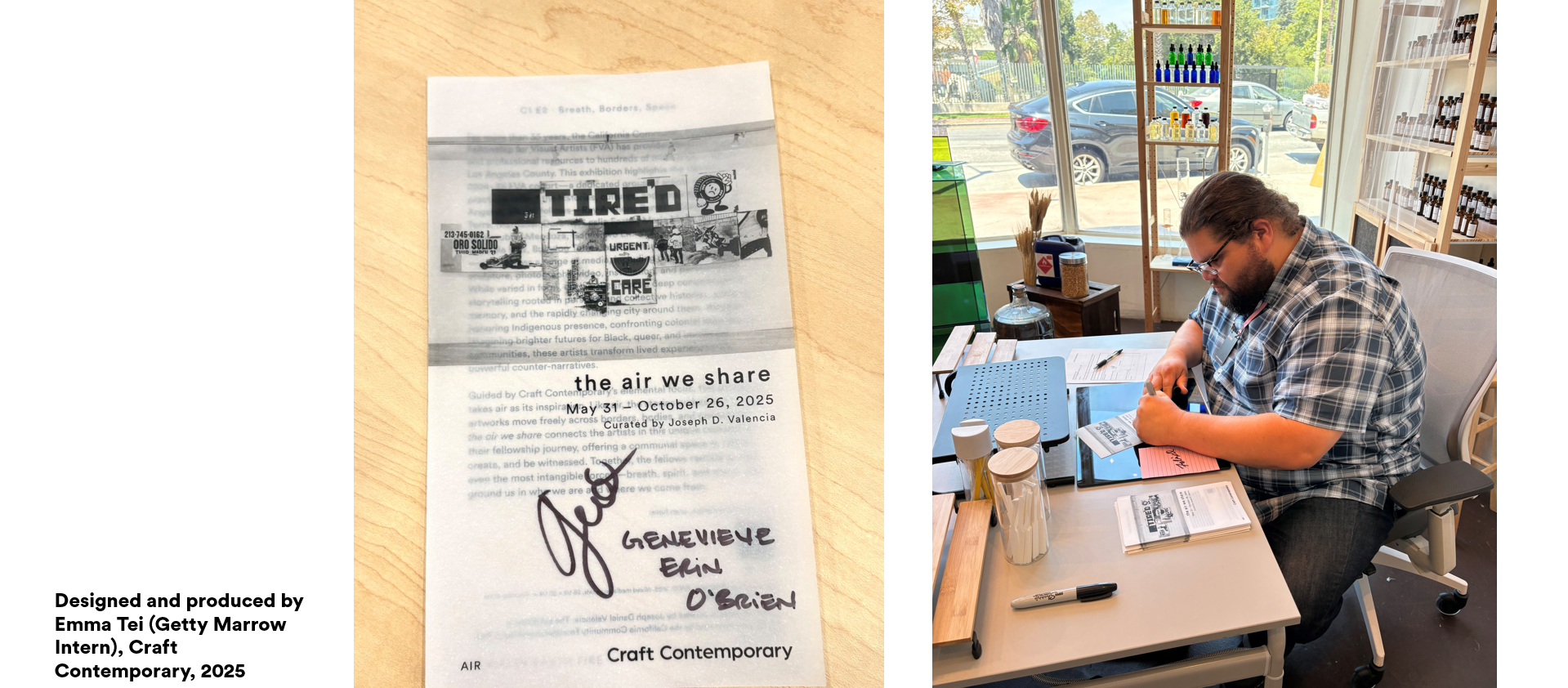
Images of recycled paper experiments, the paper comes from the printouts from previous exhibitions and will become labels and pamphlet materials for upcoming exhibits, one of them inspired by soil, 2026.
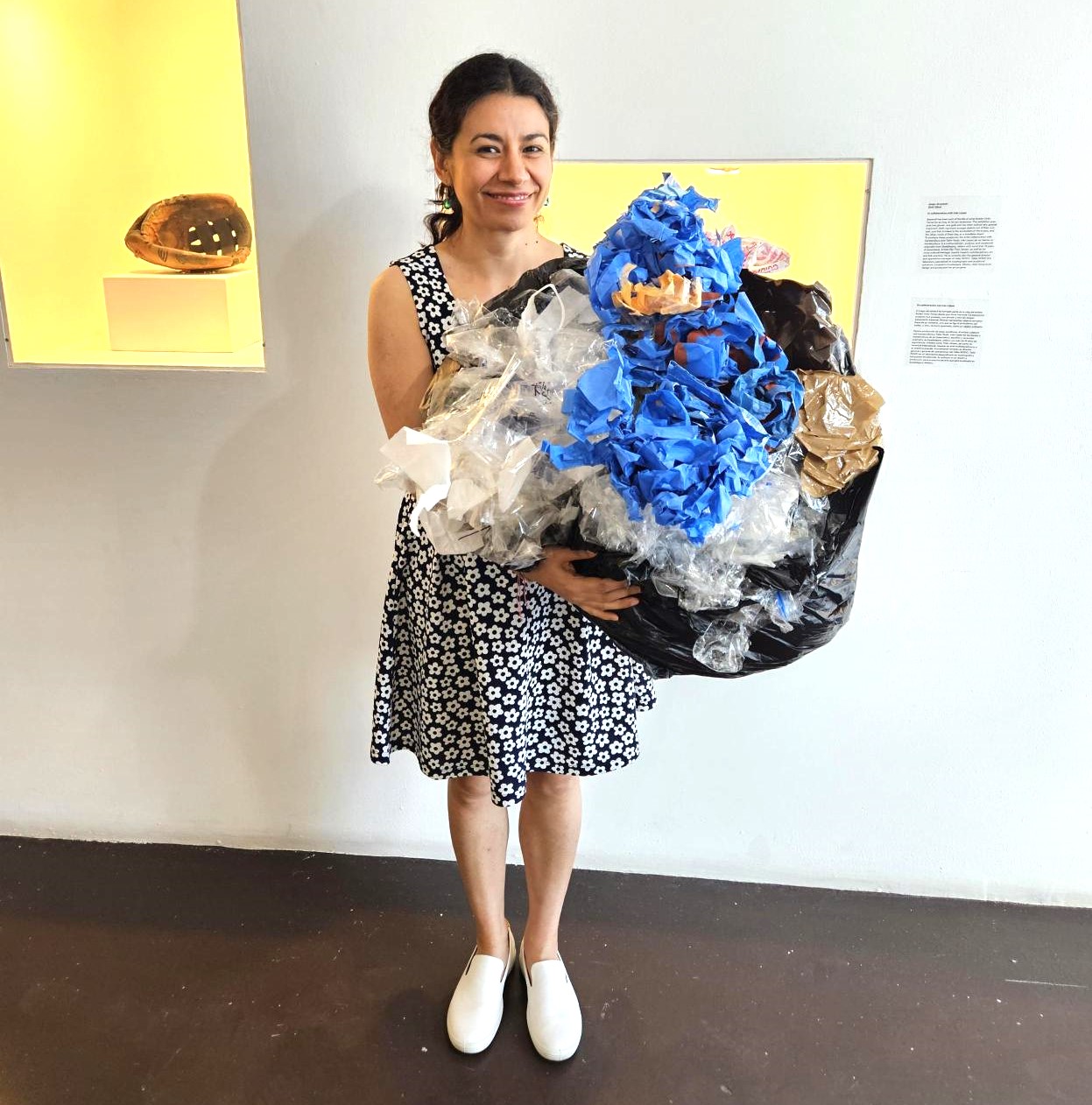
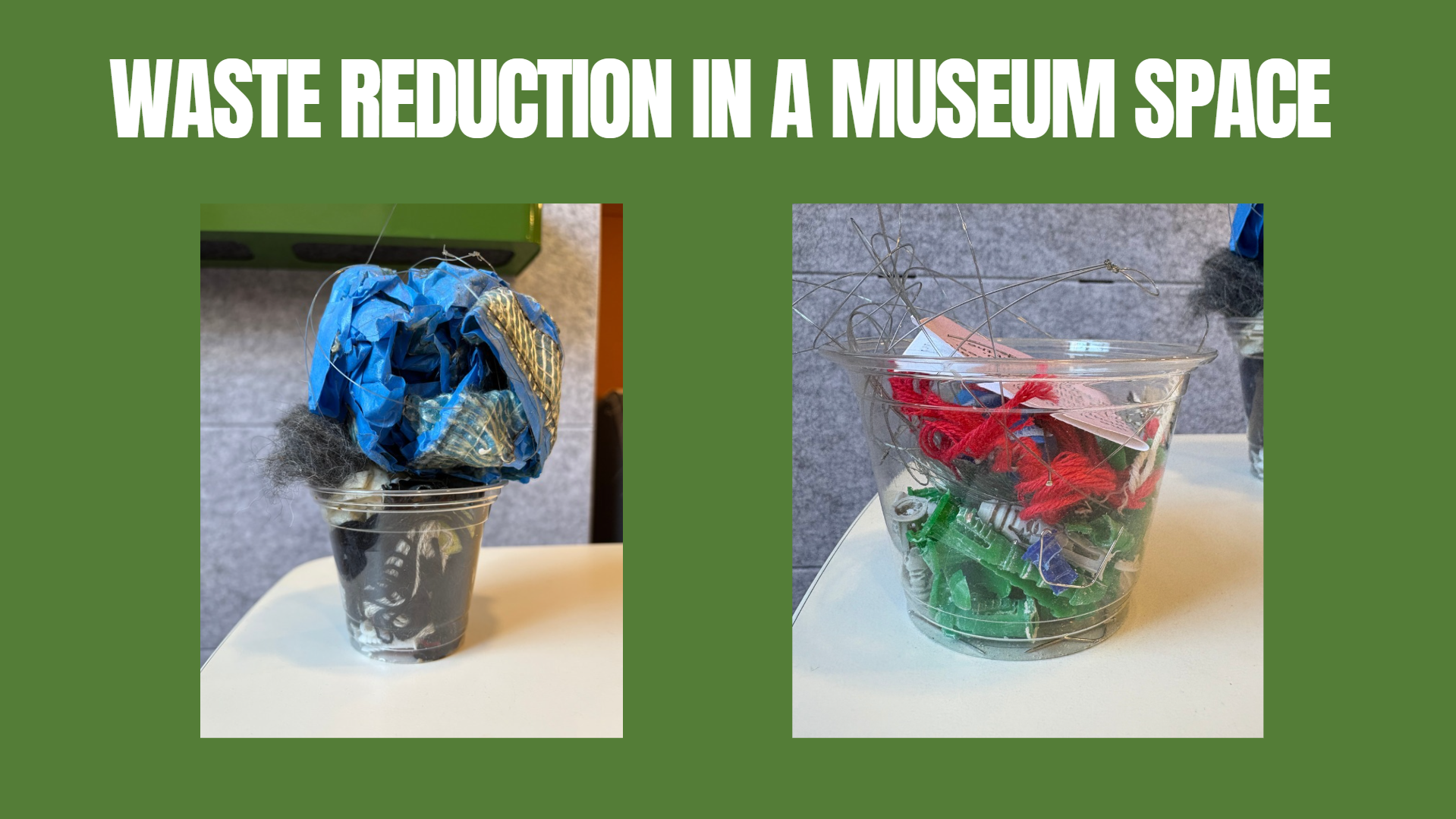
Image by Albert Huezo, trash after deinstall of exhibition prior to the eco-friendly approach (approximate weight 10 kg), 2024. Image below by Emma Tei, Getty Marrow Curatorial Intern at Craft Contemporary, tracking the waste from exhibitions in 2025 (approximate weight 10 grams each).
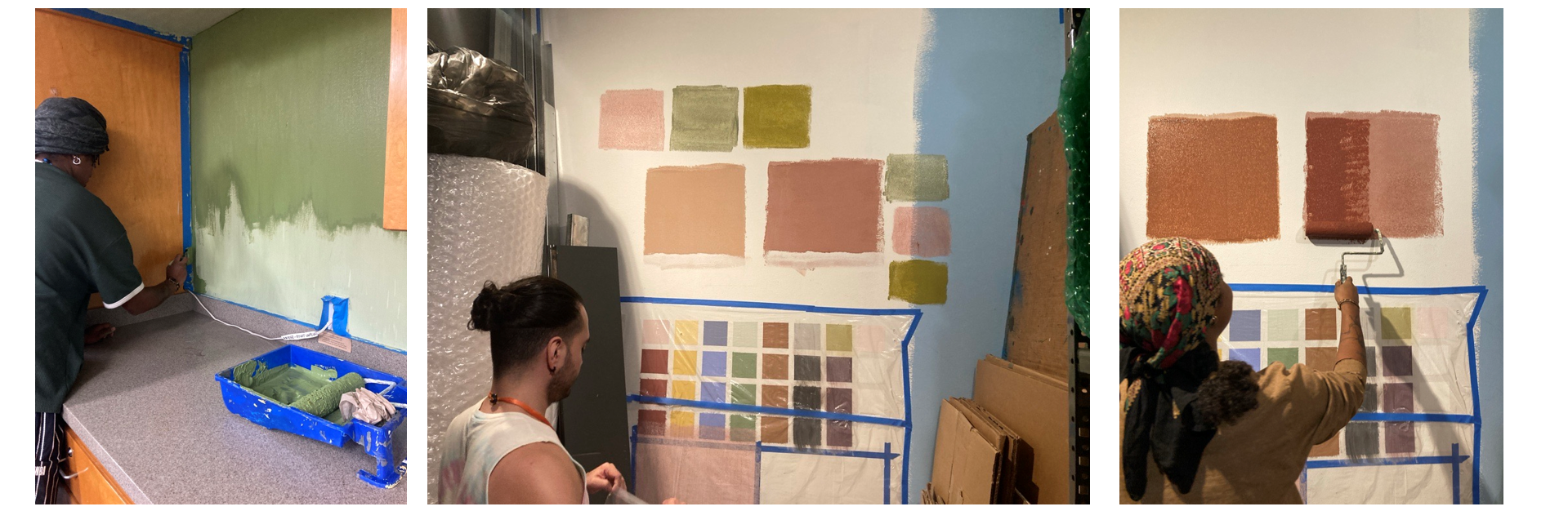
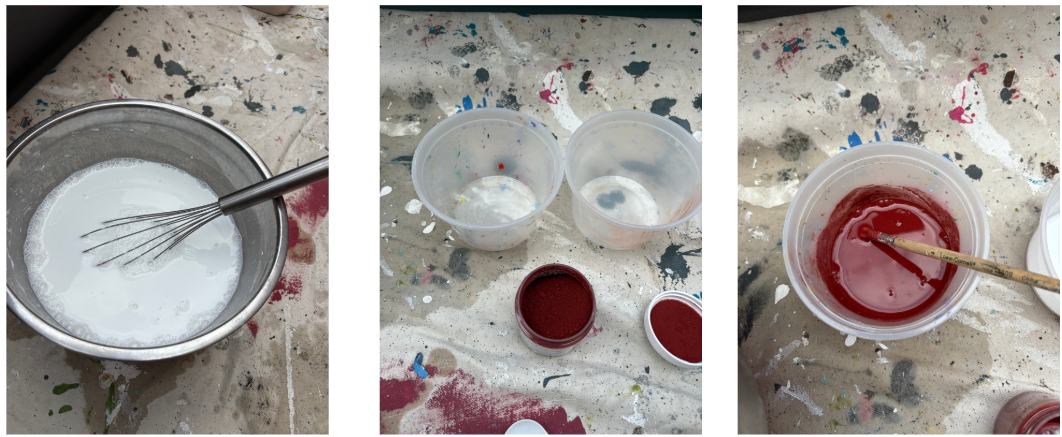
Images by Frida Cano and Emma Tei, Getty Marrow Curatorial Intern at Craft Contemporary, showing the process and experimentation during the creation of DIY paint based on Mesoamerican and ancient Japanese recipes for paint for upcoming exhibitions, 2025-2026.
Pillar 4: Universal rhythms
Following the wisdom from indigenous calendars, specifically the Tongva calendar crafter by Tongva elder Craig Torres, the exhibitions calendar is now aligned with the moon cycles. This is to ensure the natural rhythms coming from the cycles in SoCal that have specific pulses, will resonate with the natural elements prevalent in the exhibitions. As the museum’s representative, I had to get the approval from a member of the Tongva community in utilizing Torres’s calendar to draw inspiration for marking the times of Craft Contemporary’s exhibitions. By following the moon cycles, one can understand each exhibition as a living entity that follows the seasons and that grows and is re-born as the moon shifts in intensity. In this sense, every exhibition opens during the full moons and closes during the new moons. These rhythms also allow museum staff to reconnect with natural cycles and avoid burnout, a common element of small nonprofits.
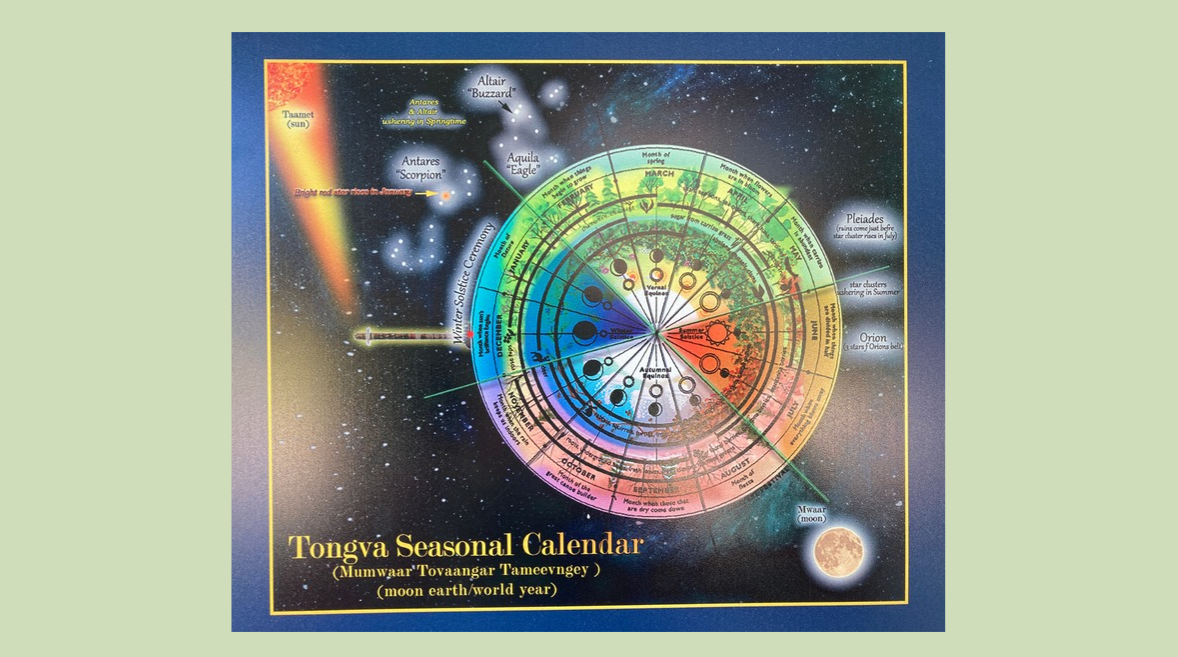
Image by Frida Cano on Craig Torres «Tongva Seasonal Calendar» featured in the exhibition Full Circle: A Return to the Land, November 13, 2021–March 13, 2022, at Descanso Gardens, Los Angeles, California.
Impact
As a cultural producer, it is extremely satisfying to witness the impact that my artistic projects have in the real world. For The [Untold] Story of Craft we have reciprocated walkthroughs with colleagues from other museums and non-art related venues in Los Angeles, for instance, LACMA, The Fowler Museum, ICALA, to mention just a few. While at Craft Contemporary, my team and I provide a holistic experience to them, where the team tells our colleagues how the project takes shape under the umbrella of The [Untold] Story of Craft in the various departments that we have at the museum, how we make our own paint for the exhibition galleries, or how every exhibition is like a homage to Mother Earth. We also provide a hands-on activity, either with clay or textiles, inspired from the featured exhibitions at the moment, so that they can experience Craft in its contemporary way. Almost every staff member from these venues have expressed admiration to the project, and wonder why they haven’t done that themselves in their museums. I love to inspire people to challenge themselves and to become their best creative version within this crazy art world that we live in.
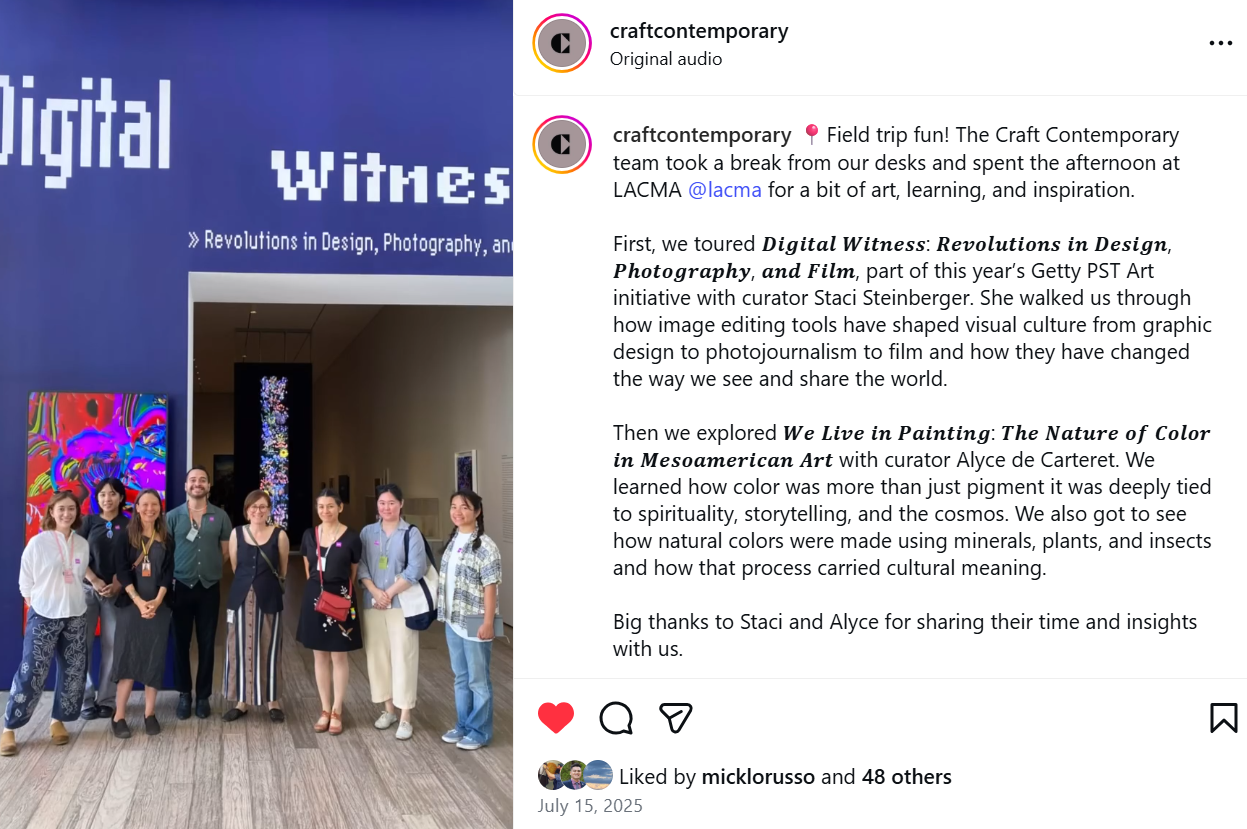
Image taken from Craft Contemporary’s IG account during a visit to LACMA, 2025.
***
And by the way, if you reached this point and wondered about the inspiration behind this project where I connect craft with the four elements, your guess is correct! I get inspiration from ancient mythologies coming from Indigenous knowledges from around the world, as well as from contemporary mythologies, such as Avatar: The Last Airbender.
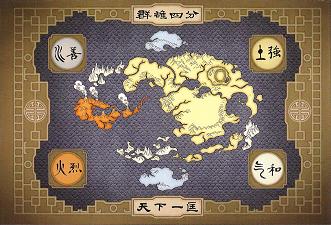
Image of Avatar_world_map
***
 frida cano